Research Internship
Internship opportunities at Schothorst Feed Research
Schothorst Feed Research is an independent research institute where scientific research is translated to practical solutions for improvement of animal feeds. Aim is to improve the competitiveness of our costumers. Therefore we support the different elements in the supply chain with additional knowledge on feed ingredients, additives, nutrient requirements and the relation between nutrition and health.
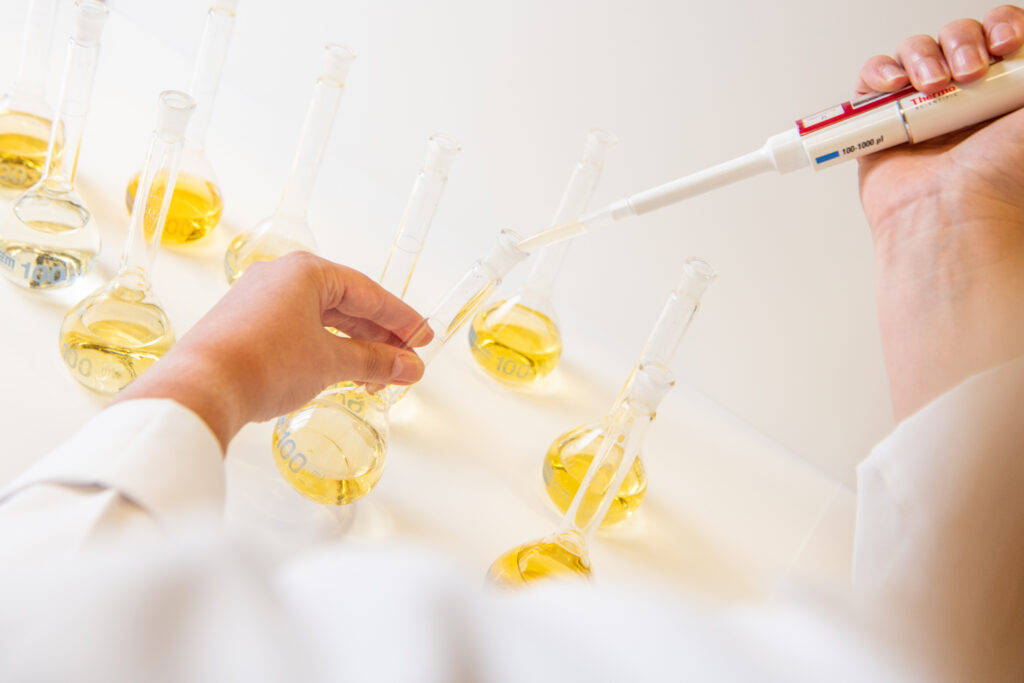
During an internship at Schothorst Feed Research your work will consist of assisting with experiments (e.g. feed weighing, collection of samples, animal weighing, animal observations), laboratory work, data processing and finally reporting the results. The different activities during the internship will depend on the kind of project and the timing of the internship. During your internship you will gain insight in design and performing scientific research, data preparation and data processing, reporting and presenting of experimental results. It is also possible to learn the background of article 12 of the Dutch Legislation for Animal Experiments (e.g. by registering trial details in the logbook).
Research themes that are regular subject within research projects of Schothorst Feed Research, are:
- Feed evaluation of concentrate ingredients
- Nutrient requirements of the animal
- Rumen physiology
- Feed additives
- Nutrition related to health, housing, environment
Below you can find examples of research where an internship could be combined with:
Poultry
Pigs
Ruminants
For more information on recent internship positions with Schothorst Feed Research, please contact:
- Laura Star (Poultry): E-mail or +31 (0)320 - 229 623
- Marjolein Priester (Pigs): E-mail or +31 (0)320 - 229 625
- Wilfried van Straalen (Ruminants): E-mail or +31 (0)320 - 292 192
Example internship poultry
Effect of enzymes in broiler diets
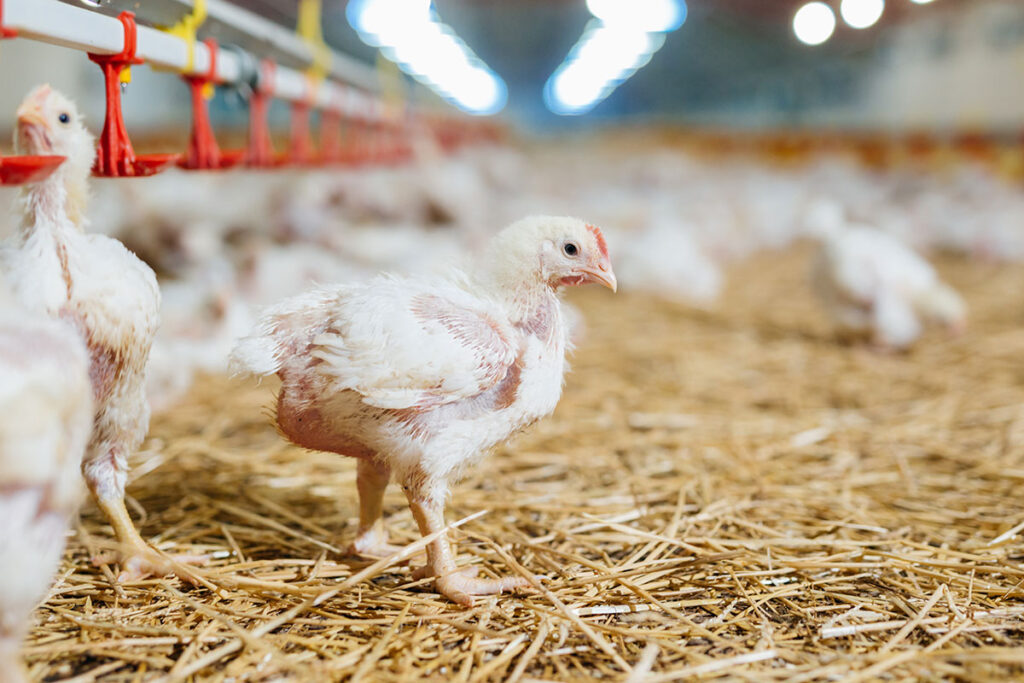
To improve production performance of broilers enzymes are added to the diet. These enzymes improve nutrient digestibility in the small intestine and will result in a higher growth rate with the same amount of feed. Question is what amount of enzyme should be added to optimise performance? Is the effect the same in male and female birds? Has the enzyme more effect in the starter or grower phase? To answer these questions birds are fed diets with different enzyme dosages. The effect can be determined by regular measurement of body weight and feed intake of the birds. Research consist of practical handlings in the broiler house, data processing, data analysis, and writing a report.
Optimal diet composition of old laying hens
Improvement in genetics, management, housing, and feed resulted in a better laying persistency of the modern laying hen. Currently, laying hens are kept till 75 to 80 weeks of age. It is expected that laying hens will be kept till 100 weeks of age (without molting) within 10 years. Most important is to keep a healthy bird with a good eggshell quality. Do birds need more calcium to support eggshell quality? Do they need less protein to reduce egg weight? Do they need more or specific vitamins to support the immune system? To answer these questions laying hens are fed diets differing in nutrient composition. By weekly measurement of feed intake, egg production and egg weight we gain inside in the requirement of the birds and possibilities to keep laying hens till 100 weeks of age.
Example internship pigs
Supply of creep feed in farrowing pen
Because of increasing litter sizes supply of extra feed for piglets becomes more important to provide sufficient nutrients. Feed intake before weaning also helps the piglets to ease the transition from sow milk to solid feed after weaning. However, in practice there is a big variation of feed intake within a litter and between litters. This means that a substantial amount of the piglets have low or no creep feed intake. This research focuses on how feed intake of piglets can be stimulated. This internship contains some practical work, data analysis and data interpretation. Multiple feeds were offered to the piglets in the farrowing pen. To determine feed intake the amount of feed supplied and leftovers were measured. Also feed intake behaviour of the piglets was monitored with a video camera to find out which piglets do eat and which don’t.
Digestibility studies
On regular basis there are trials on digestibility of feedstuffs in weaned piglets, grower-finishers and sows. This internship contains some practical work on the farm and in the laboratory, data analysis and data interpretation. To make a feed formulation that meets the requirements of the animals it is important to know the digestibility coefficients of the feedstuffs which are used. The digestibility of weaned piglets, grower-finishers and sows is different because of different stages of development of the intestinal tract. The sows digestibility is highest and digestibility in weaned piglets is lowest. Therefore it is necessary to perform digestibility trials on all categories of pigs.During the trails the animals are fed a basal diet to which a tested feedstuff is added. After an adaptation period of a few days faeces samples are collected and after analysis the digestibility coefficients can be determined.
Example internship ruminants
Rumen physiological study
On a regular basis experiments are conducted with rumen fistulated dairy cows. In this type of experiments we observe the processes in the rumen like the course of the pH throughout the day or the production of volatile fatty acids. These experiments require practical work as well as data processing. An example is described below:
If the pH of the rumen content falls below 5.8 the activity of the cell wall degrading bacteria decreases.
With a further decrease below 5.5 this activity is further reduced, but also inflammation of the rumen wall can arise which negatively influences production and health. In this trial the effect of an additive on rumen pH is measured to evaluate its effectiveness in rations with high risk on rumen acidosis. The aim of the experiment is to determine the effect of an additive on the course of the rumen pH in rumen fistulated cows.
The experiment is conducted as a 3 x 3 Latin Square, with three treatments in three periods with three rumen fistulated cows. The experiment consists of three periods of three weeks. In every period every cow is allocated to one of three treatments during the whole period. Measurements take place in the third week of each period. The rumen pH is measured by putting pH meters in the rumen. The course of the pH throughout the day is measured every minute and registered in a data logger in the rumen. The mean of all pH measurements of a day, minimum pH and time of pH < 5.8; pH < 5.5 and pH < 5.2 are determined. The time below these critical limits is calculated as the sum of all pH measurements of one day below the critical limits (in min/d).